I’ve had Christmas Day off, I allowed myself that with persuasion from family. But I was still planning ahead and thinking about my ‘to do’ list for each room.
Boxing Day progress: Stripping wallpaper in the ‘old’ kitchen so the walls can be prepped for the plasterer and also reopen an old doorway and block up the present one.
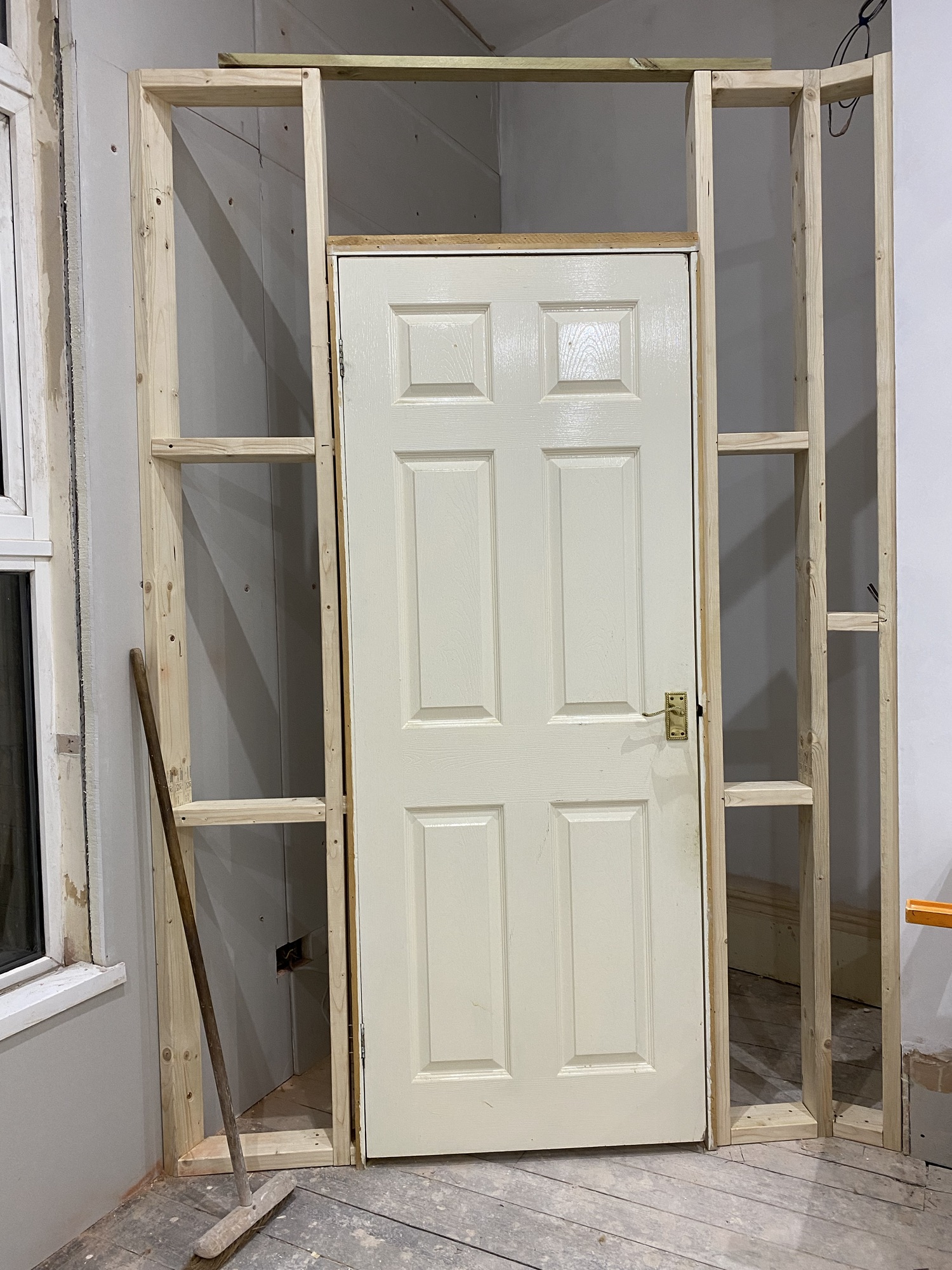
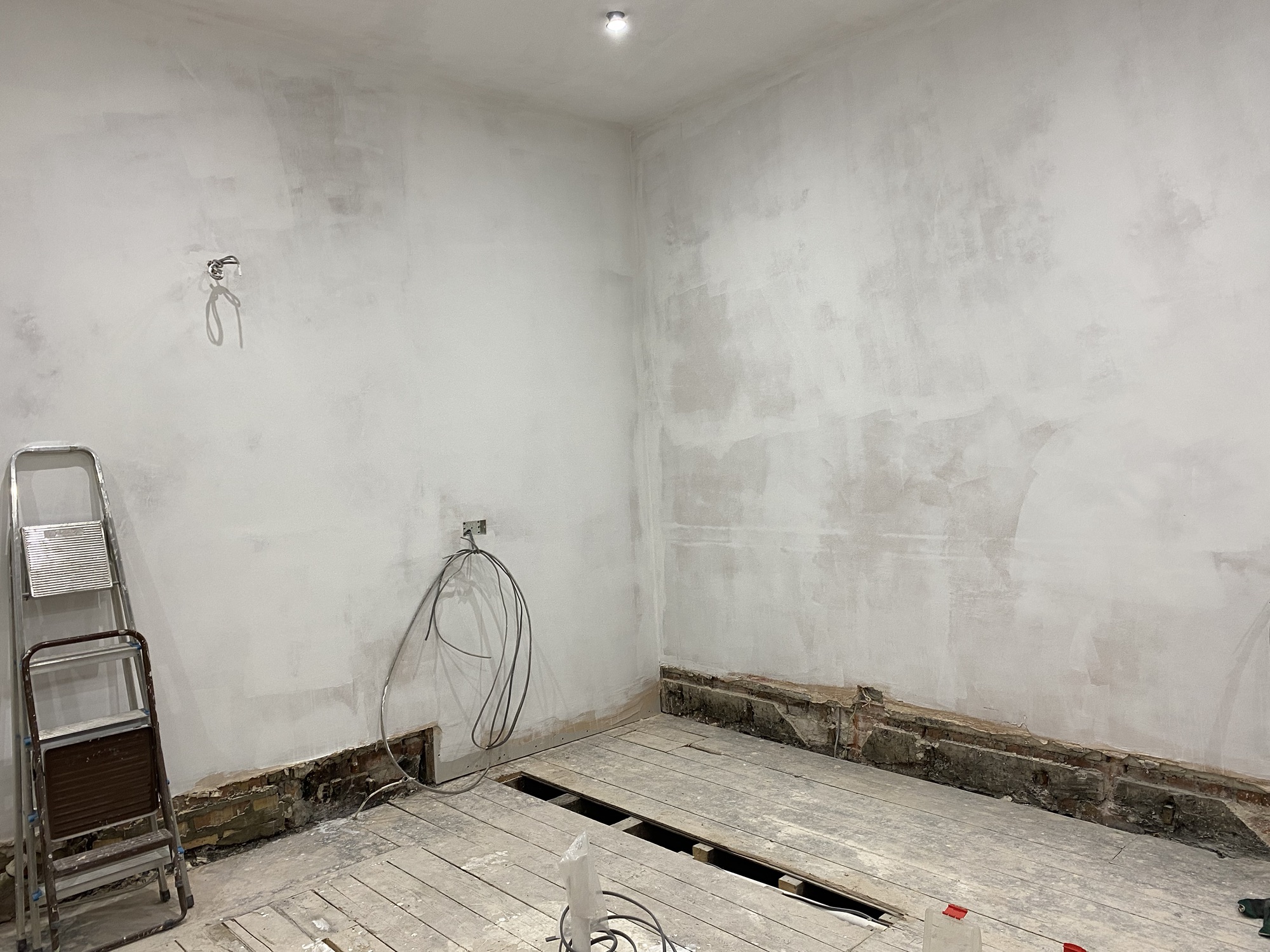
I started on the framework for the ‘walk in pantry’ in the new kitchen. Quite pleased with how it’s looking. We all need a cupboard to put mops, brooms and all manner of kitchen things that just won’t fit in a standard kitchen unit. The boiler will also be housed in here, out of sight. The kitchen walls and ceiling have been given a mist coat.
What’s a ‘mist coat’??
A ‘mist coat’ is a watered down coat of paint which is applied to dried, new plaster before you apply ‘full’ (non watered down) coats of paint. New plaster is a really permeable surface (which simply means it will soak up any moisture really quickly!) So watering down your first coat will help the plaster to soak up the paint and create a bond between the new plaster and the paint. This is a critical stage!!
Without the mist coat you’re likely to have very poor adhesion between your paint and your plaster and quite often it will crack, flake or even peel off in sheets sometimes. Adding water to the first coat helps the plaster to really bond to the paint as it’s able to soak it up due to the paint being thinner. To get it on the walls. Rollering is much easier for large areas but be mindful that as it’s watered down it will splash more. The new plaster draws in the paint at different rates so it will appear patchy in places. This is fine.
Then check over your walls for any imperfections (such as plaster lumps etc) and repair. Then once your mist coat is dry you can put on your top two coats of paint.
 Victorian Vibes